
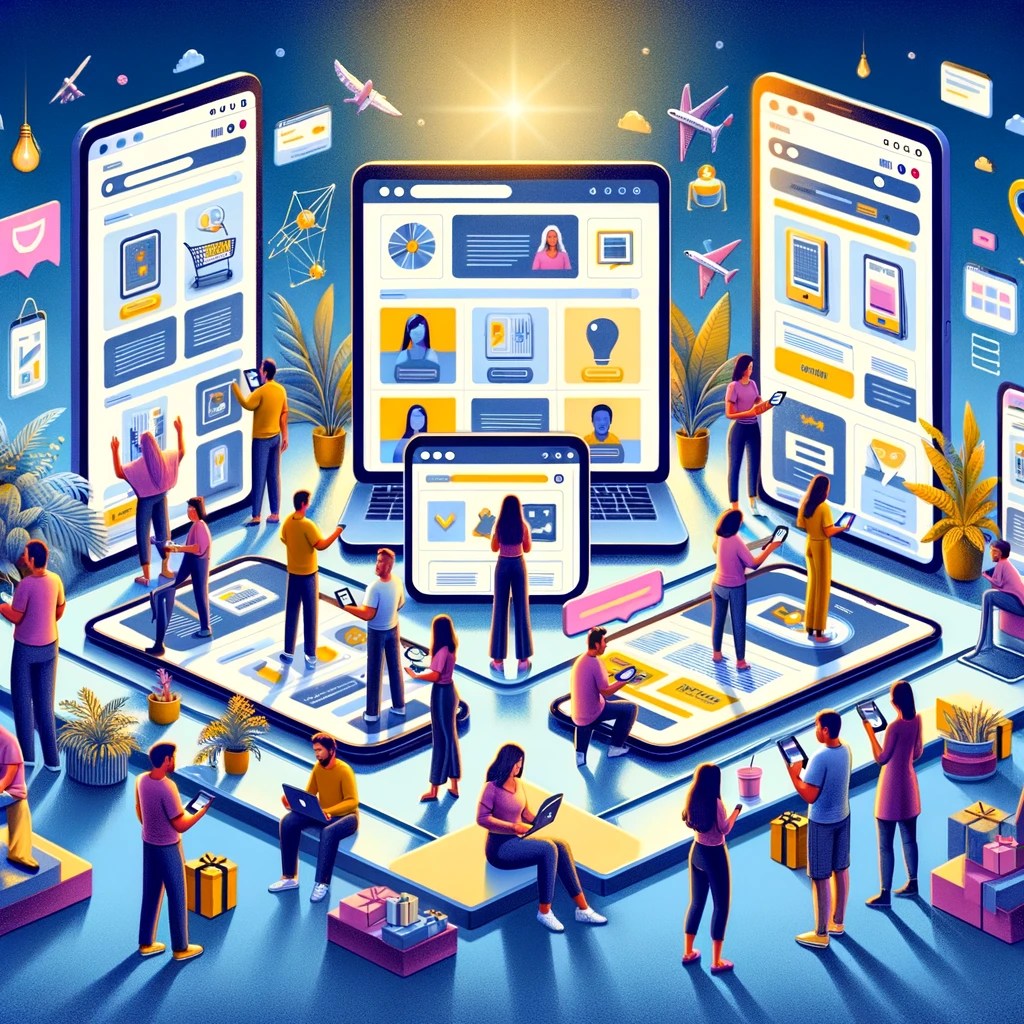
The shoes in the ad are blue wingtips with white stitching. Now imagine clicking that ad and landing on the product display page for that exact pair of shoes with a model that looks like you and your size pre-selected. All you have to do is click “add to cart.” You may not notice this right away but you will be more likely to purchase than an ad that drops you on a home page or landing page that is disconnected from the emotion you felt when you first saw the ad, the emotion that made you click.
Dear eCommerce Brands: Qualified clicks are really hard to get so don’t blow it when you get one!
Listen and Subscribe from Your Favorite Podcast Platform

Takeaways
- The strategic fit between Webflow and Intellimize is expected to bring great new use cases and delight customers.
- Intellimize’s A-B testing simplifies the process for marketers to visually drag and drop and move things around on their website to test ideas.
- Personalization at Intellimize involves using rules and machine learning to deliver personalized experiences down to the individual level.
- The application of machine learning and AI in personalization aims to optimize page content for the most efficient or highest volume conversions.
- The conversation highlights the potential for e-commerce brands to personalize every user’s experience on every page of the website without a lot of effort.
- The founding story of Intellimize is rooted in the need for personalization and optimization on websites, driven by the experience of the company’s founder as a marketer.
- The impact of personalization on user experience is discussed, emphasizing the importance of showing the right content to each person at the right time.
- AI and machine learning enable real-time personalization and optimization of website content, leading to improved user experience and increased conversions.
- Traditional A-B testing methods often result in delayed decision-making and are unable to adapt to rapidly changing user behaviors and market dynamics.
- The objections to AI-driven optimization often stem from a lack of understanding and mindset shifts required within the organization, but the benefits include increased efficiency, improved ROAS, and the ability to do more with less.
- Success in AI-driven optimization is measured not only by revenue and conversions but also by customer satisfaction and brand advocacy, highlighting the holistic impact on the business.
- Common pitfalls in AI-driven optimization include the failure to communicate the reality of idea success rates and the lack of alignment within the organization on testing strategies and brand guidelines.
- The use case of Dermalogica demonstrates the substantial impact of AI-driven optimization on revenue growth, subscription conversions, and user experience, showcasing the tangible benefits for brands.
Chapters
00:00 The Acquisition of Intellimize by Webflow
02:38 Simplifying A-B Testing with Intellimize
05:48 Delivering Personalized Experiences with Intellimize
15:14 The Founding Story of Intellimize
25:54 The Potential for Personalized Experiences on E-commerce Websites
26:29 The Power of AI and Machine Learning in Real-Time Website Optimization
29:21 Challenges and Mindset Shifts in Traditional A-B Testing
30:46 Overcoming Objections and Embracing AI-Driven Optimization
33:29 Measuring Success Beyond Revenue: The Holistic Impact
48:53 Common Pitfalls and Best Practices in AI-Driven Optimization
50:03 Dermalogica: A Case Study in Revenue Impact and Customer Experience


 Podcast
Leave a comment